


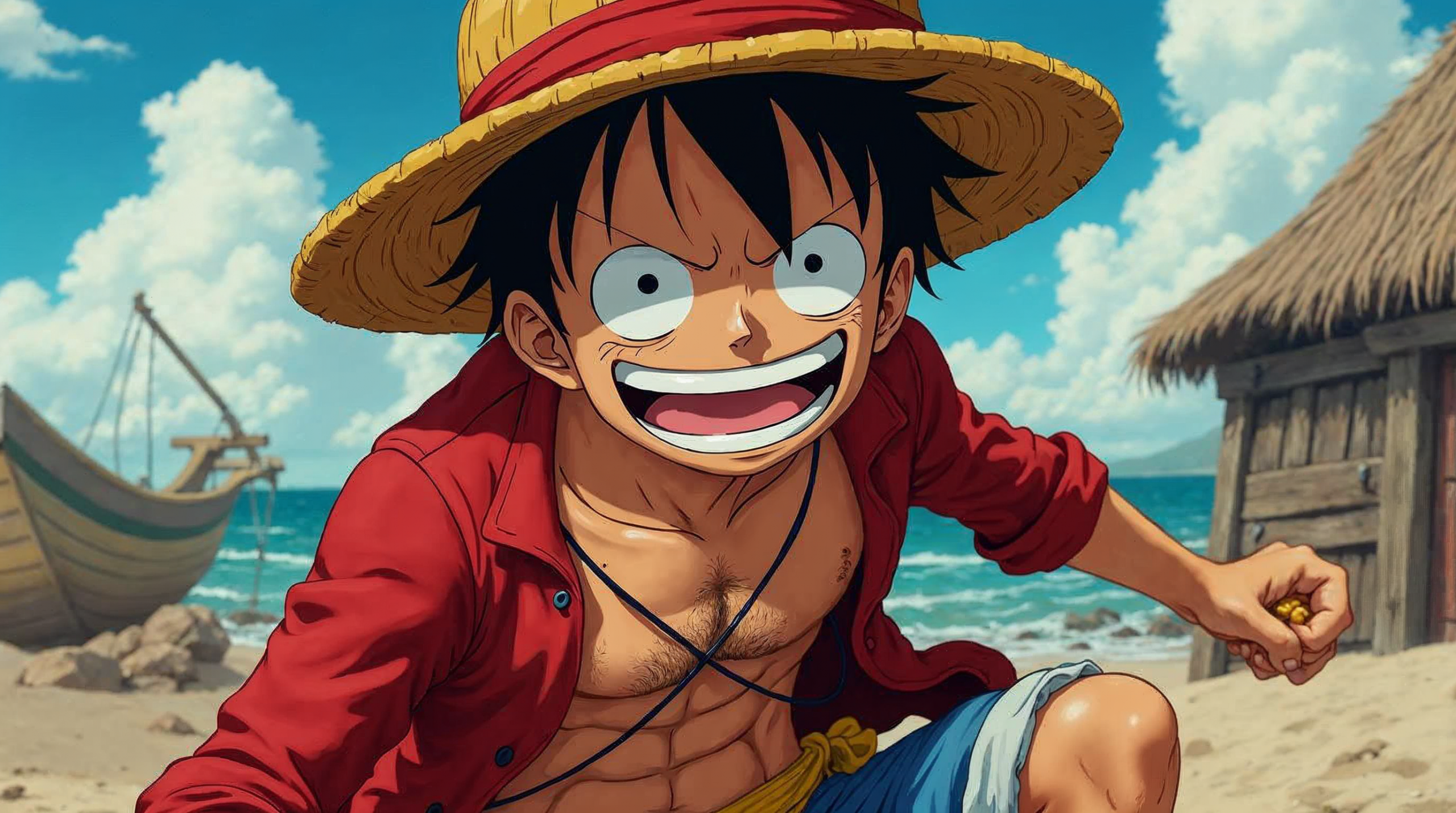
For a quarter-century,One Piecehas been stuffed with tyrants, slavers, warlords, mob bosses, and mass-murder vibes. And yet Monkey D. Luffy, the rubber-bodied hurricane at the center of it all, almost never straight-up kills his enemies.
Fans have argued about it forever. Is Luffy just too nice? Is this some squeaky-clean “good guy” code? Nah. Eiichiro Oda’s explanation flips that Hallmark reading on its head: Luffy isn’t sparing villains out of compassion. He’s doing something colder, and, from a storytelling standpoint, way more useful.
Oda’s core idea, repeated over the years in interviews and companion books tied to the series, is simple: death is quick. Luffy’s real punishment is taking away the thing that makes his enemies tick, their dream, their scheme, their empire, their whole reason for getting out of bed and hurting people.
Oda’s rule: Luffy doesn’t “forgive”, he wrecks the dream
The line most associated with Oda’s explanation goes something like this: killing an enemy ends their suffering. Crushing their ambition forces them to live with failure.
That’s the key. Luffy isn’t a moral philosopher. He’s not out here running a pirate version of The Hague. He shows up, punches the foundation out from under a monster, frees whoever’s being crushed, and sails on. An execution would drag the story into a different genre, vengeance, criminal justice, the hero as judge and hangman.
And Oda’s careful about that. Luffy’s a pirate. He doesn’t represent the state. He doesn’t “sentence” people. He collides with them. Big difference.
This also solves a practical problem: once your hero starts killing, readers start keeping score. Why didthatguy die butthisguy gets to live? Oda sidesteps the whole moral spreadsheet by making Luffy’s signature move something else: public defeat and total collapse of the villain’s project.
From East Blue to Dressrosa: humiliation beats a “clean” death
You can see the pattern early, back in East Blue, the series’ opening stretch. The bad guys there are often local strongmen running protection rackets and fear-based little kingdoms. Luffy doesn’t just beat them; he breaks the symbol. The town stops believing. Their “power” evaporates in front of witnesses.
And honestly? For a petty tyrant, dying in a blaze of glory can look like an exit ramp. Living after everyone sees you exposed? That sticks.
Then you get toAlabasta, where the villain isn’t just throwing fists, he’s manipulating an entire country. The real defeat isn’t the final punch. It’s the plan collapsing, the political con getting dragged into daylight, the loss of position and control. That’s Oda’s thesis in action: the enemy survives, but the dream is dead.
Enies Lobbyand the whole World Government saga push it further. The “enemy” is a machine. Luffy can smash agents all day, but killing one person doesn’t fix a system that prints replacements. So Oda leans into symbolic violence: defiance, flags burned, authority embarrassed, the illusion cracked.
And then there’sDressrosa, a fan-favorite example because the tyrant there is tied to industry, terror, and even the manipulation of memory itself. The payoff isn’t an execution, it’s a total fall in front of the people who suffered. The villain lives, but loses the story he told about himself: savior, king, untouchable. Gone. In Oda’s grammar, that’s the point.
Yes, it’s also Shonen Jump: teen audience, editorial limits, and a global brand
Oda’s “dream-crushing” philosophy explains a lot, but let’s not pretendOne Pieceexists in a vacuum. It’s been running inWeekly Shonen Jumpsince1997, a magazine built for teens, with rules (formal and informal) about how far the main hero can go.
Death exists inOne Piece. The series has gone dark plenty of times. But there’s a difference between a world where people die and a protagonist who regularly kills. The second choice brands the character in a way you can’t un-brand.
AndOne Pieceisn’t just a manga anymore. It’s an ecosystem: anime, movies, games, merch, global licensing, the whole machine. A hero who’s routinely executing defeated enemies shifts the tone hard. It’s tougher to keep the series’ adventure-comedy energy when your lead is stacking bodies like a prestige-TV antihero.
So Oda threads the needle: Luffy hits like a freight train, but he’s framed as a breaker of chains, not a bringer of death.
The real punishment in One Piece is living after you lose
Oda’s explanation lands because it matches whatOne Piececares about most: dreams. In this story, major characters aren’t defined by “survive” or “win.” They’re defined by an obsession, noble, ridiculous, cruel, whatever. That dream is their spine.
Luffy doesn’t spare enemies to save their souls. He spares them because death doesn’t do what he’s trying to do. It doesn’t expose the lie. It doesn’t restore a country’s memory. It doesn’t show the crowd that the “invincible” guy bleeds.
Let the tyrant live, stripped of power, status, network, and myth, and the consequences can play out. Arrest, exile, humiliation, a bitter comeback, a temporary alliance. That’s serialized storytelling gold, and Oda uses it.
Sure, there’s a fair criticism: letting monsters live can feel irresponsible. ButOne Pieceisn’t interested in making Luffy the world’s parole board. The series keeps him in a consistent lane: catalyst, wrecking ball, liberator. Not administrator of punishment.
That’s why Oda’s explanation keeps circulating. It reminds people that inOne Piece, “defeat” isn’t just a knockout. It’s the destruction of an empire, and the slow, humiliating afterlife of a dream that used to terrify everyone.
Florentino Pérez rinde homenaje a José Emilio Santamaría, leyenda del Real Madrid


