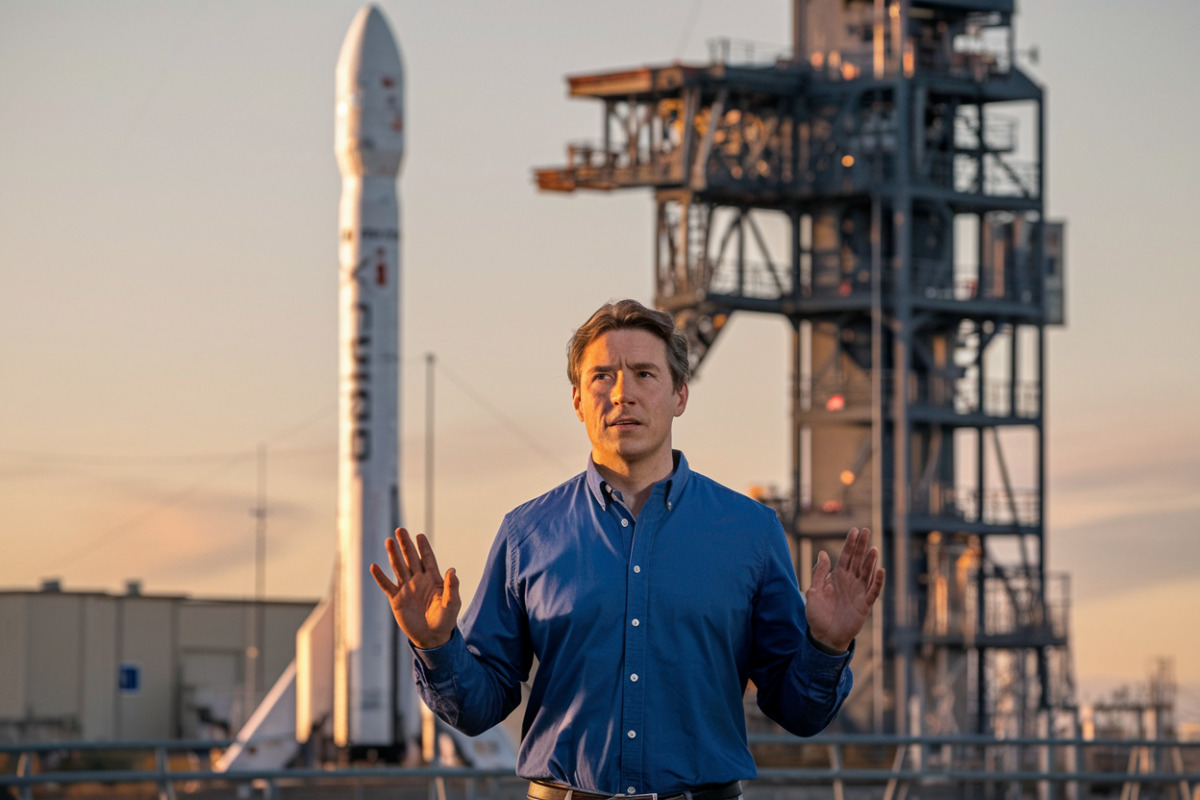
SpaceX is kicking around a shiny new idea: put AI data centers in orbit. According to the French tech outletLes Numériques, Elon Musk’s rocket shop is eyeing server farms in space, because apparently Earth is getting a little too… terrestrial.
It’s a great headline. It’s also a great way to get punched in the face by basic physics.
Data centers on the ground guzzle electricity and sweat heat like a linebacker in August. In orbit, you don’t get to cheat with air, fans, or cooling towers. You get vacuum. And vacuum doesn’t care about your pitch deck.
Problem No. 1: In space, heat doesn’t “go away”, it just sits there
On Earth, data centers dump heat using convection: air moving over hot parts, HVAC systems, sometimes liquid cooling. In orbit, there’s no atmosphere, so convection is off the table. You can’t blow air that isn’t there.
That leaves radiation, the slow, stubborn way heat leaks out as infrared energy. It works, but it’s dramatically less efficient than what we do on the ground. Translation: if you want to run serious compute up there, you’d need radiators so large they start sounding less like “a satellite” and more like “a flying billboard the size of a football field.”
And the chips we’re talking about aren’t gentle. Modern AI accelerators, the GPU-class hardware used to train big models, can push power densities north of400 watts per square centimeter. That’s an obscene amount of heat concentrated in a tiny area. Keeping that within safe operating temperatures in a vacuum is the kind of engineering problem that makes thermodynamics professors smile grimly.
Problem No. 2: Power, AI wants a feast, orbit serves snacks
Sure, solar panels in space do better than panels on Earth because there’s no atmosphere filtering sunlight. Nice perk.
Still: the math is ugly.
A medium-size terrestrial data center typically pulls10 to 50 megawatts, about10 to 50 million watts. Meanwhile, the International Space Station, one of the most complex machines humans have ever bolted together in orbit, generates roughly120 kilowattsfrom its solar arrays, about120,000 watts.
So you’re looking at a power gap of roughly100 to 400 times. That’s not a “we’ll optimize it” gap. That’s a “you’re going to need a whole different kind of space power system” gap.
So why float this idea at all?
One explanation is the simplest: messaging. Big, audacious concepts attract attention, talent, and money. SpaceX knows how to sell a future, sometimes years before the hardware is ready.
Another possibility is that SpaceX is betting on breakthroughs that don’t exist yet: ultra-cold computing approaches (people love to wave around “quantum” in these conversations), new heat-dissipation materials, or entirely new computer architectures designed for space instead of adapted from Earth.
But right now, those are hopes, not plans. And the laws of thermodynamics aren’t a software problem you can patch later.
What this really shows is how badly the tech world wants more compute, and how quickly that hunger runs into the hard limits of energy and heat. Space is seductive. Space is also unforgiving. And at the moment, it’s winning the argument.