


“Protect 30% of the planet by 2030.” Sounds clean, right? Like you can just draw a few lines on a map, slap on a “protected” label, and call it a day.
Here’s the messier truth a new report is hammering home as the 2030 deadline creeps closer: conservation isn’t geometry. It’s politics. It’s livelihoods. It’s who gets told they can’t fish here anymore, can’t graze there anymore, can’t collect firewood like their family’s done for generations.
And if the 30×30 crowd tries to hit the number by steamrolling the people who actually live in these places, they won’t just spark backlash—they could end up sabotaging the ecosystems they’re trying to save.
30×30 is global math. The consequences are painfully local.
On paper, protecting 30% of land and sea by 2030 looks like a management exercise: pick zones, restrict activities, monitor, enforce.
On the ground, every “zone” overlaps with somebody’s real life—fishing grounds, farms, grazing routes, tourism jobs, cultural sites, access to water, access to wood. The report’s blunt point: the human impact isn’t determined only by the final percentage. It’s determined by how governments choose the places that count toward that percentage.
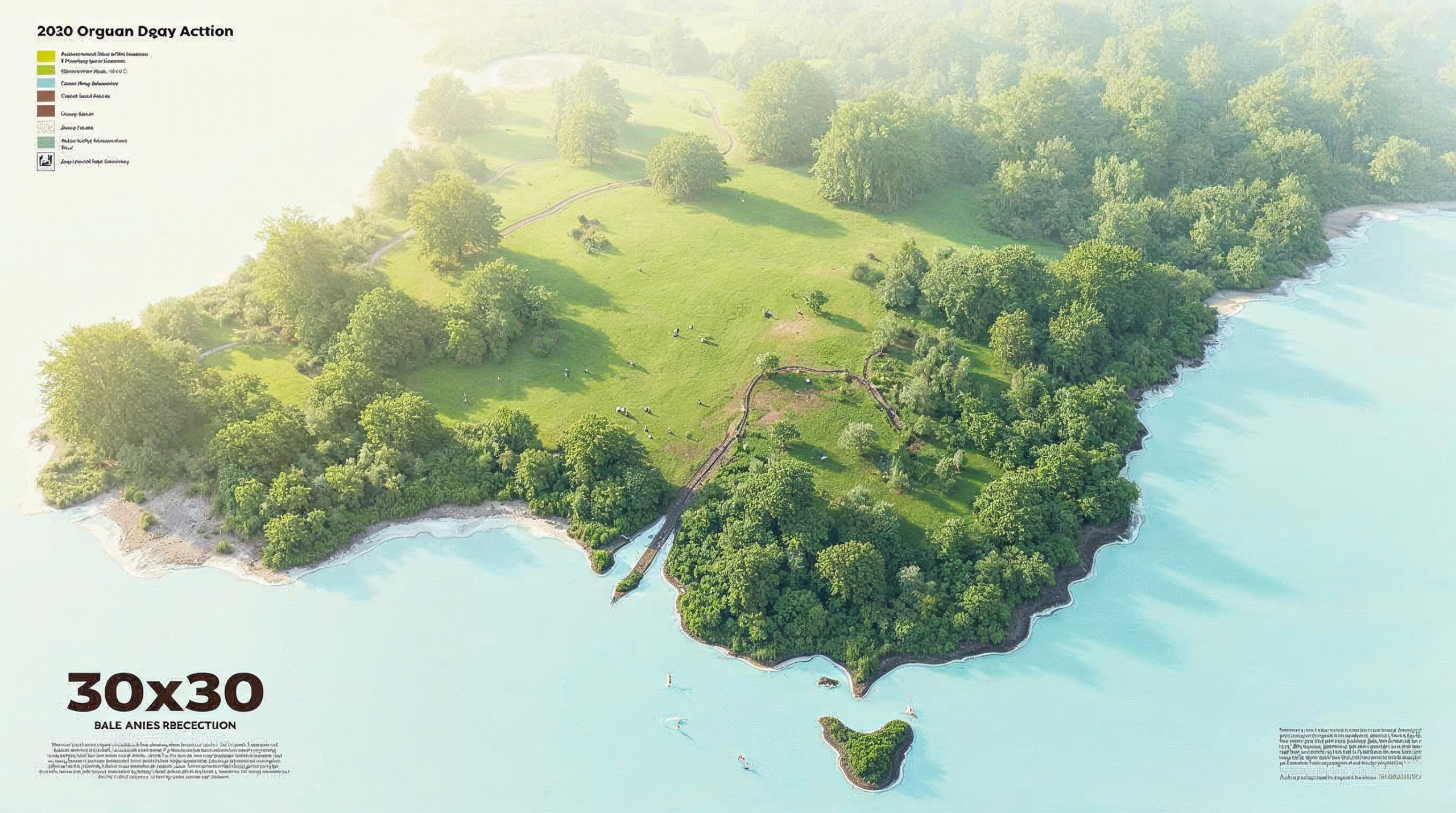
That’s where the real fight starts—who gets hit, and how many, depends on what policymakers decide is “priority nature.” Locking up a heavily used coastal fishing area doesn’t land the same way as protecting a remote patch of land with few residents. And targeting biodiversity hotspots that also happen to be resource lifelines for nearby communities forces immediate trade-offs between ecological goals and basic survival.
The report is basically waving a red flag at a common political habit: treating 30×30 like a land-grab scoreboard—rack up acreage now, deal with the social fallout later. The authors argue the “human factor” isn’t a side quest. It’s a design constraint, right up there with habitat connectivity and ecosystem representation.
What you choose to protect changes everything—and not just for wildlife
The report leans on a simple idea that a lot of glossy conservation announcements dodge: social impacts aren’t an accident. They’re the result of prioritization.
Conservation means deciding what comes first—certain habitats, certain species, certain areas that matter for ecological function. Pick one set of priorities and you’ll protect one set of places. Pick another and you’ll protect different places. Either way, you’re choosing which communities will feel the squeeze.
The report compares it to engineering—optimizing a network. If you optimize for resilience, you build one kind of system. If you optimize for capacity or redundancy, you build another. Same deal here: different ecological priorities produce different protected-area maps, and those maps land on different people.
Translated into plain English: a conservation plan can shove the burden onto specific groups—often already vulnerable—if it targets areas where people depend directly on natural resources. Sure, you can design a plan that reduces social friction. But it might also protect the “wrong” places for certain ecological goals. The report doesn’t pretend there’s one magic answer. It demands honesty: make the link between ecological priorities and human consequences explicit, before the protests and court battles start.
And it reminds policymakers of something they love to forget: protected areas aren’t just boundaries. They’re rules—restrictions on concrete, daily practices. Without a detailed understanding of local use, “protection” can look like a glass case from a capital-city office and feel like outright dispossession in the village.
If you treat people like an afterthought, you’ll get failure—fast
The report’s core line should be stapled to every 30×30 press release: the human context has to be a key consideration if these plans are going to work for people and for nature.
Because a protected area can exist on paper and still collapse in reality. Ignore local communities and you invite three predictable outcomes:
First: evasion. If rules feel illegitimate, compliance drops—and enforcement gets expensive and ugly.
Second: displacement. Ban an activity in one zone and it often pops up somewhere else, sometimes in a more fragile ecosystem.
Third: conflict. Conservation becomes a political grenade, and the protections don’t last.
The report argues for the opposite mindset: supporting local communities isn’t charity. It’s how you make conservation stick. Think of it like product design—ignore the end users and your “perfect” system fails the minute it hits real life.
There’s also a warning about what counts as “success.” You can notch a short-term statistical win—more acres labeled protected—while wrecking local living conditions. That’s a great way to breed long-term resistance, weaken local institutions, and turn conservation into a permanent culture war.
The 2030 deadline is a credibility test—and speed can make things worse
The report is framed as a pre-2030 alarm bell. Deadlines create momentum, but they also create perverse incentives: chase what’s easy to measure (square miles designated) and neglect what takes time (local governance, trust, negotiated compromises).
The temptation is obvious: hit 30% with quick decisions now, then “manage” the social impacts later. That looks efficient in a spreadsheet. In real life, it can backfire—delays from legal challenges, noncompliance, political reversals, and community opposition that doesn’t politely disappear.
The report also calls out a basic mismatch. Conservation is sold as a global benefit—biodiversity, ecosystem stability, planetary health. But the costs are local, paid by identifiable people who suddenly face new limits on land and water they rely on. If 30×30 is going to mean anything beyond a headline, the global ambition has to line up with local reality.
And the report lands on one clear conclusion even if it doesn’t prescribe a single blueprint: if you want protected areas that last, you back the people who live and work there—because they’re the ones making daily decisions in the very places conservation policy is trying to reshape.


