
America loves a food rule. No carbs after 6. Fruit is “candy.” Pasta is a “cheat.” And dinner, of all meals, has become the place where diet advice goes to fight in the parking lot.
Carolin Kotke, a nutrition expert, has a calmer take: foods don’t turn into villains when the sun goes down. What matters is whether your dinner actually supports your body without dumping a day’s worth of calories into the final hours before bed.
Her argument is simple and, frankly, refreshing: the healthiest dinner usually isn’t the most restrictive. It’s balanced, repeatable, and eaten at a time that doesn’t sabotage your sleep.
Your body does run on a clock, just not the “carbs are illegal at night” kind
Yes, your metabolism changes over the day. Your circadian rhythm affects appetite, glucose handling, and insulin sensitivity. Researchers have been mapping this for years, and the French article points to a 2022 paper out of the University of Lübeck looking at what happens when people eat the same meal in the morning versus the evening.
But the internet took that nuance and turned it into a bumper sticker:no carbs at night.
Kotke calls that what it is, oversimplified. Carbs don’t become “bad” after some magical hour. Their impact depends on the dose, what else is on the plate (protein and fiber matter), how active you were, and who you are metabolically.
The real problem scenario isn’t “a reasonable portion of rice with dinner.” It’s the classic modern combo: a late meal that’s calorie-dense, low in fiber, light on protein, eaten fast, then you collapse into bed. That’s not pasta’s fault. That’s a lifestyle pile-up.
The dinner trap: fear-based eating that backfires
Kotke also goes after the psychology. A lot of dinner anxiety isn’t coming from hard evidence, it’s coming from years of repeated, simplified rules blasted across social media and weight-loss programs.
And when fear runs the menu, you tend to land in one of two dumb places:
Either you eat a sad, skimpy dinner and end up prowling the kitchen at 10 p.m.
Or you “behave” all evening and then overcorrect late, when you’re tired, hungry, and your willpower is in the gutter.
Carbs, fruit, pasta: the point is context, not courtroom verdicts
Let’s talk about the usual suspects.
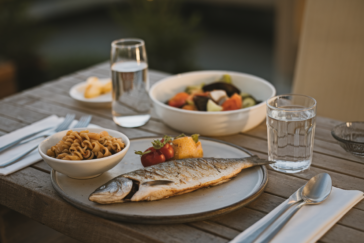
Pasta:People act like noodles are a direct deposit into your love handles. Kotke’s view is more practical: pasta with vegetables and a real protein is a different animal than a late-night bowl drowned in cream and cheese, followed by dessert, followed by “just a little something” while streaming TV. One is dinner. The other is a calorie avalanche.
Fruit:The “fruit = sugar” crowd loves to lump a banana in with a frosted cupcake. That ignores fiber, micronutrients, and the fact that whole fruit tends to fill you up. A banana after dinner can be fine, especially if it replaces a pastry. The trouble starts when the “healthy fruit” becomes a delivery system for chocolate, cookies, or half a jar of peanut butter.
Dessert:Swearing off dessert can cut calories. It can also crank up frustration and lead to messier eating later. Kotke isn’t pitching nightly cake. She’s pitching structure: if you want something sweet, keep it simple and portioned, yogurt, fruit, or a small chosen treat, rather than a sugar bomb after an already heavy meal.
What a “good” dinner looks like: protein, fiber, and carbs you actually choose
Kotke’s template is boring in the best way, because it works:
Proteinfor satiety and muscle maintenance (fish, eggs, dairy, tofu, tempeh, beans, or smart grain-and-legume combos).
Fiberfrom vegetables and legumes to slow digestion and steady blood sugar.
Carbsas a flexible piece, not a guilty secret, whole grains, potatoes, whole-wheat bread, or yes, pasta, depending on your day and your needs.
The target isn’t “light” as in “tiny.” It’s “right-sized” and not engineered to make you hungry again in two hours.
The three levers that matter more than banning bread
Kotke zeroes in on three knobs you can actually turn without turning dinner into a moral test.
1) Timing.If you eat late and go to bed soon after, you’re more likely to feel heavy, sleep worse, and wake up cranky. You don’t need a rigid rule, but giving yourself a decent buffer between dinner and sleep usually beats obsessing over whether you ate a potato.
2) Portions.Most people burn less energy at night, especially if their day involved a chair and a screen. So a massive dinner can quietly become the biggest calorie event of your day. If you trained hard or worked a physical job, you may need more. If you barely moved, you probably don’t.
3) Calorie density.Some foods pack a ton of calories into a small volume, fried stuff, pastries, heavy cheeses, processed meats, salty snacks. Those add up fast at night, especially in front of a TV. Kotke’s fix isn’t puritanical. It’s practical: more vegetables, simpler cooking, and treat the densest foods like a choice, not a nightly habit.
This is also why “no carbs at night” sometimes appears to “work”: it accidentally reduces calories. But you can get the same benefit without the rigidity by keeping carbs, choosing better ones, and pairing them with protein and fiber.
Eat slower. Seriously.
One last point Kotke highlights: speed. When you inhale dinner, your body doesn’t get a fair shot at sending the “I’m full” signal. A calmer meal, nothing fancy, just not wolfed down, cuts the odds of overeating.
No food police required. Just a dinner that does its job: closes the day, supports recovery, and doesn’t set you up for a midnight snack hunt.