
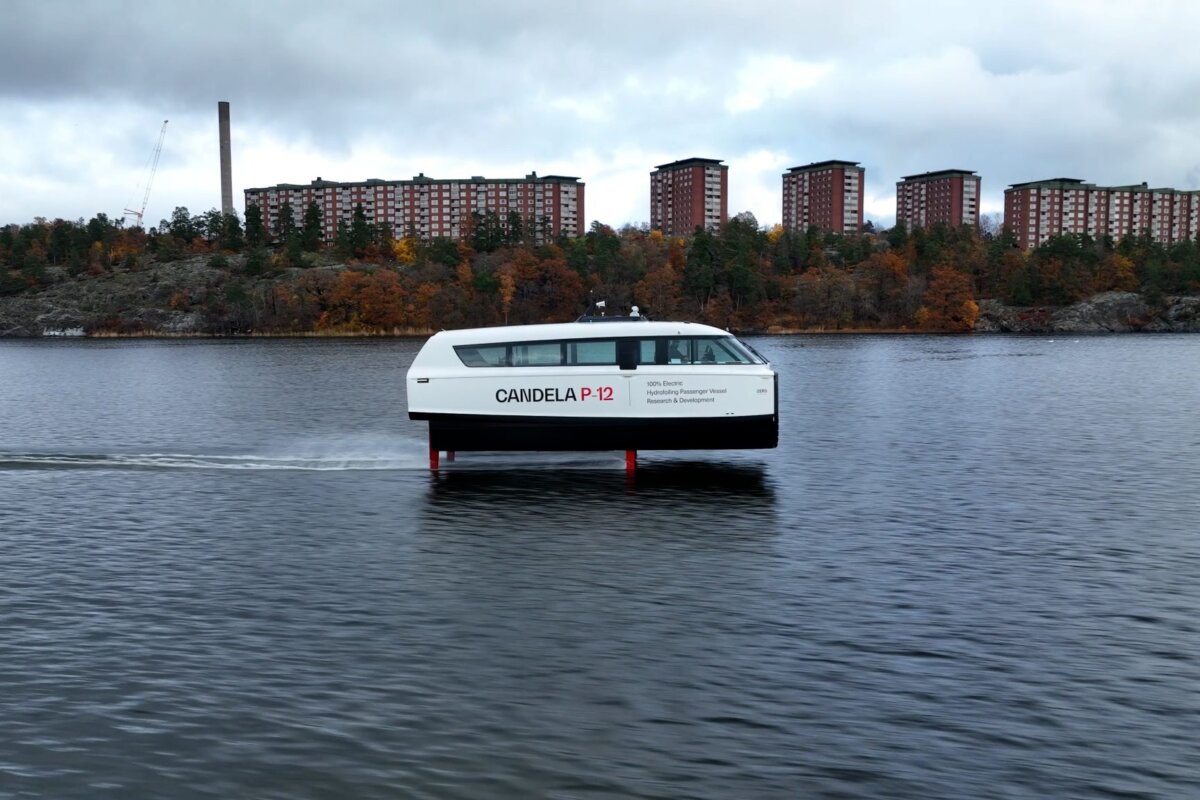
Stockholm is basically a city built on water—14 islands stitched together by bridges, tunnels, and a whole lot of patience.
So when a boat company shows up claiming it can make a ferry “fly,” this isn’t some yacht-show gimmick. It’s public transit. And in a place where ferries matter, a faster, cleaner one can punch way above its weight.
Since late 2024, Stockholm has been running a regular electric hydrofoil shuttle from the suburbs into the city center. After a little more than a year, the early verdict from the project’s backers is blunt: compared with a similar diesel ferry, emissions are down 94%.
That number lands harder when you hear the local context: diesel ferries account for nearly half of the public transit system’s transport emissions. Swap even part of that fleet and you’re not “raising awareness”—you’re moving the needle.
A commute that drops from 55 minutes to 30—and that’s the real sales pitch
The route connects Ekerö (a suburban area west of the city) to central Stockholm near City Hall. The time savings are the kind commuters actually feel: roughly 55 minutes down to 30.
The vessel is the Candela P-12 Shuttle, billed as the fastest electric passenger ship currently in service. And it’s not fast because someone got reckless—it’s fast because it throws a tiny wake.
Wake matters because wake rules speed. In many urban waterways, speed limits exist mainly to prevent shoreline erosion and keep smaller boats from getting rocked. Candela’s pitch is that its wake is so low it earned a speed exemption, letting it run around 25 knots (about 29 mph) where the usual limit is closer to 12 knots (about 14 mph).
Make a ferry meaningfully faster than driving and people will actually use it. During the trial, ridership on the line reportedly rose 22.5%. That’s not a “nice-to-have” bump—that’s behavior changing.
How it “flies”: carbon-fiber hydrofoils and less drag, period
The “flying” part is just physics with good branding. Under the hull are carbon-fiber hydrofoils—basically underwater wings. As the boat speeds up, those foils generate lift and raise the hull out of the water.
Less hull in the water means less drag. Less drag means you don’t need to burn nearly as much energy to maintain speed. That’s the whole trick.
The modern twist is computer control. Sensors and onboard software constantly adjust the foil angles to keep the boat stable while it’s “up” and moving. The payoff isn’t only efficiency—it’s comfort: a smoother ride than a traditional ferry that’s plowing through chop.
And the side benefits are the kind city officials obsess over: the wake is said to be comparable to a small outboard motorboat, which means less shoreline erosion and less disruption to the ecosystem.
Noise is another selling point. Measurements cited by the project compare it to a car cruising around 28 mph, and describe the boat as barely audible from about 80 feet away.
Sure, “it flies” is marketing. But the marketing is attached to something practical: using less energy per trip while still going fast enough to matter.
The green pitch is nice. The real argument is frequency and capacity
Public transit doesn’t survive on virtue. It survives on math: frequency, capacity, reliability, and cost per trip.
The pilot’s backers float a scenario that gets straight to the point: replace 2 diesel ferries with 6 of these hydrofoil shuttles, and you could move from departures once an hour to departures every 15 minutes.
That’s the difference between “a ferry exists” and “a ferry is useful.”
They also claim total capacity would rise about 150%, with lower operating costs thanks to the usual electric advantages: less energy use and less maintenance than diesel engines. Charging infrastructure at the dock is described as a relatively modest upgrade compared with heavier electric ferries.
One more number they’re pushing: projected socio-economic benefits of 119 million Swedish kronor—about $11 million in U.S. dollars at recent exchange rates. Not life-changing money for a national government, but real enough for a city transit budget.
But don’t miss the fine print: those projections depend on local realities—dock availability, route design, and whether regulators keep allowing higher speeds.
Could this work elsewhere—or is Stockholm a special case?
The concept fits a very specific sweet spot: short, repetitive urban trips where saving 25 minutes changes daily life, and where cutting emissions 94% cleans up a transit system fast.
Plenty of European cities have rivers, canals, and bays that could function like ready-made transit corridors—if the boats are quiet, don’t chew up shorelines, and don’t get stuck crawling at low speed.
And this isn’t just a demo ride for influencers. The boat is in serial production, which matters if you’re a transit agency that’s tired of being sold vaporware.
Still, hydrofoils come with constraints. They like certain operating conditions, and their value drops if you can’t run them fast. If regulators force the boat back down near 12 knots, a big chunk of the “why bother?” advantage disappears.
There’s also the unglamorous procurement reality: the article notes this model isn’t currently being sold in France, which is another way of saying cities can’t just snap their fingers and order a fleet tomorrow. (And without firm local bids, anyone tossing out a purchase price is guessing.)
The real policy choice for cities is blunt: do you spend your next transit dollars on more buses and trams—or do you turn the water you already have into a high-frequency route?
For riders, the decision is even simpler. If the boat takes 30 minutes instead of 55, a lot of people are going to stop pretending the car commute is “fine.”