


Arnold Schwarzenegger and Alan Ritchson are officially on the clock. Their upcoming action flick, The Man With The Bag, now has a release date set for 2026, according to an RSS item circulating with the announcement.
And yeah, a date sounds boring—until you’ve watched how this business works. A movie can sit in that hazy “in development” purgatory forever, living off a couple big names and a title. Then a release date drops, and suddenly it’s real. Not “real” like art. Real like: marketing budgets, theater bookings, distribution partners, and rival studios quietly shoving their own movies out of the way.
A “perfect” 2026 date turns this from a rumor into a scheduled event
The RSS blurb puts it plainly: the new Schwarzenegger–Ritchson action movie has its release date “in the bag.” In entertainment-speak, that’s code for: this thing has moved from wishful thinking to a calendar commitment. Once you plant a flag on a date, you’re making a bunch of expensive decisions—ad buys, trailer timing, poster drops, and which weekends you’re willing to fight for.
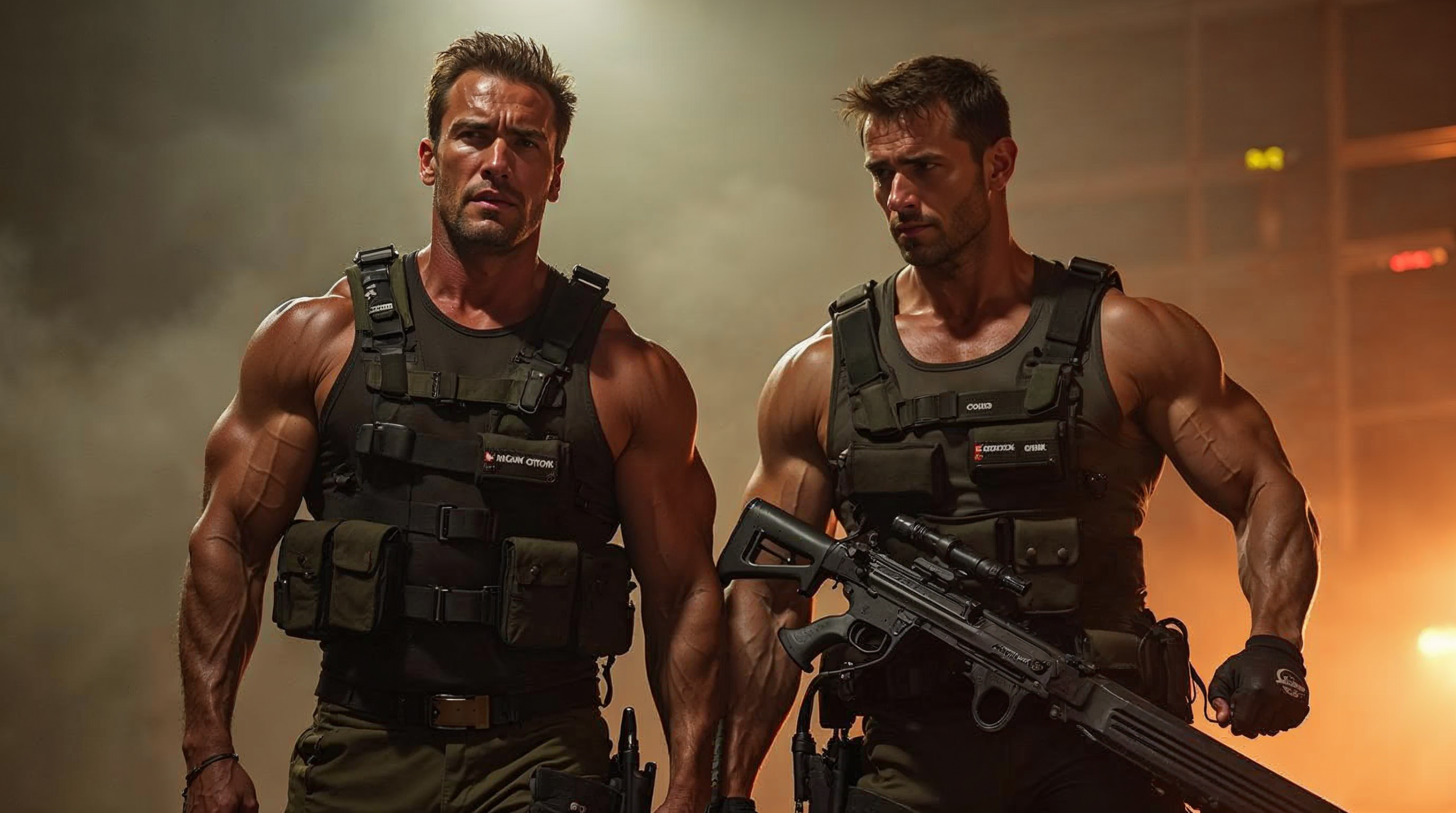
The word perfect is doing some heavy lifting here. Trade outlets love to talk about “good corridors” on the calendar—windows where certain genres tend to hit harder. Studios don’t pick dates like they’re throwing darts. They pick them like they’re placing bets.
And the genre label matters. This is being sold as an action movie, not a family film, not a straight comedy, not a prestige thriller. That tells you what they’re aiming for: pace, impact, big moments you can cut into a trailer. Action also travels well internationally, which is why the release date becomes a strategic weapon the second it’s locked.
Schwarzenegger + Ritchson is the whole pitch—at least for now
Let’s not kid ourselves: the headline value here is the pairing. Schwarzenegger is still a walking brand of action cinema—physical presence, iconic persona, franchise muscle memory. A lot of modern action tries to sell you a whole “universe.” This one, at least at the announcement stage, is selling you two bodies on a poster and the promise that they’ll collide.
A “Quantum” Sensor Spent 10 Months in Orbit Tracking Earth’s Magnetic Field—Here’s Why It Matters
Ritchson—best known to a lot of Americans as the brick-wall lead of Amazon’s Reacher—represents the newer pipeline: action stardom built through streaming and series exposure, not just movie openings. Pairing him with Schwarzenegger isn’t subtle. It’s the legend plus the current guy, stacked to widen the audience and give the marketing team two different generations to target.
This kind of casting also makes the project sellable early. Even before anyone’s seen a frame, two recognizable names make for easy headlines, easy social clips, easy recall. That’s another reason dates matter: once the countdown starts, you can schedule the drip-feed—casting, first-look photos, teaser, trailer, final trailer, talk-show circuit.
The Man With The Bag sounds like a classic action setup—on purpose
The RSS item doesn’t give plot details, but the title The Man With The Bag basically telegraphs a genre engine. A bag means an object. An object means a mission. And a mission means somebody’s chasing somebody—steal it, protect it, deliver it, don’t open it, whatever. In action movies, the “thing” is rarely just a prop. It’s the excuse for the pursuit, the fights, the escalating stakes.
Marketing-wise, it’s clean: short, memorable, and just mysterious enough to make you want the logline without giving away the whole movie. Plenty of films go for franchise-friendly titles or overly descriptive ones. This sounds more like an old-school hook—simple, archetypal, easy to sell in one breath.
Simple doesn’t mean dumb, though. Modern action often takes a straightforward premise and dresses it up with faster editing, sharper choreography, darker tone, or a streak of humor. The RSS doesn’t say which direction they’re going. But a 2026 date means the machine is already moving, and the campaign will eventually have to tell us what flavor of action this is.
Release dates are a studio knife fight, not a courtesy to viewers
A release date isn’t just “FYI, see you then.” It’s positioning. Calling it a “perfect” date hints at the real game: don’t get flattened by a bigger title, grab a weekend that historically works for action, and avoid a month where the market’s already clogged with explosions.
Studios build calendars like war rooms build maps. They’re hunting for open attention—media oxygen, audience appetite, theater availability. Theater chains, meanwhile, are thinking about how long a movie can hold screens and what kind of crowd it pulls. So “perfect” can mean a bunch of things at once: the right competitive gap, the right seasonal vibe, and the right fit for the movie’s image.
Planting this in 2026 also claims mental real estate early. Even without knowing what else is coming that year, the announcement tells the industry: this slot is spoken for. And it gives the studio a structure for every beat between now and then.
What this tiny announcement says about the marketing that’s coming
The RSS copy is short, but it’s basically pre-packaged for repetition: a new action movie, two stars, a title, and a date “in the bag.” That phrasing is borderline ad copy—designed to travel fast and get reposted without anyone needing extra context.
That’s usually how these rollouts go. First you confirm the project and the stars. Then you establish tone. Then you show the goods. The release date is the spine that holds it all together—giving outlets something to peg updates to, giving social media a countdown, giving partners a schedule for promotions and events.
But once you announce a date, you also invite scrutiny. People will want the director, the plot, the first images—something concrete beyond “trust us.” For now, the message is simple: Schwarzenegger and Ritchson are attached, and 2026 is when Hollywood plans to cash the check.


