
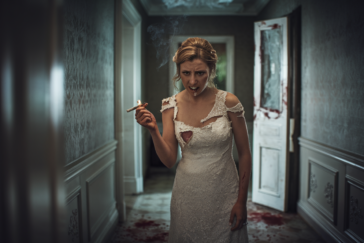
Grace MacCaullay can’t even finish a cigarette before somebody decides it’s time to hunt her again.
That’s the hook forReady or Not 2: Here I Come, the newly announced follow-up to the 2019 sleeper hit. Samara Weaving is back as Grace, and the sequel is pitching a nasty little idea: this isn’t some distant “years later” revisit. It’s a continuation, like the universe hit “resume” on her trauma and never asked permission.
And yeah, that’s exactly why this sequel has a problem to solve. The first movie worked because Grace was dropped into a rich-family-from-hell ritual and had to learn the rules while bleeding out in designer hallways. Do that twice and you risk turning a sharp thriller into a mechanical rerun. So the question isn’t “can they make another one?” It’s “how do you throw the same woman into the same kind of trap without the audience rolling its eyes?”
Hollywood math: $57 million on a $6 million budget buys you a sequel every time
The originalReady or Not(2019) pulled in about$57 million worldwide, according toBox Office Mojo. The budget was widely reported around$6 million. That’s the kind of profit margin that makes studio executives believe in God again.
So no, a sequel isn’t some bold artistic gamble. It’s portfolio management. A clean, one-sentence premise. A lead actress who became the movie’s calling card. And a concept that plays great in trailers: “wedding night turns into a deadly game of hide-and-seek.”
The first film landed because it mixed high-intensity horror with class satire, wealthy weirdos treating murder like a family board game, while the outsider bride realizes she married into a cult of entitlement. It was nasty, funny, and mean in the right ways.
Samara Weaving is the franchise, because the “monster” is the system, not a mask
Most horror franchises cling to something stable: a mask, a knife, a mythology, a boogeyman with branding.Ready or Notflipped that. The stable element isn’t the killer, it’s the survivor.
Weaving’s Grace wasn’t your typical wide-eyed “final girl.” She was scrappy, furious, physically wrecked, and weirdly funny even when she was panicking. She didn’t glide through the movie; she endured it. That’s why she stuck.
But bringing her back changes the engine. In the first film, part of the terror was disbelief, Grace slowly realizing these people weren’t kidding. In the sequel, disbelief is off the table. If she recognizes the setup, the movie has to find tension somewhere else: new rules, a bigger network, a different kind of trap, or a psychological toll that actually matters.
The cigarette detail is doing a lot of work here. It’s mundane, almost petty, and that’s the point. Grace tries to grab one normal second, and it gets ripped away immediately. That’s horror as trauma logic: you don’t “move on,” you get yanked back.
“Here I Come” and the sequel problem: you can’t just replay the same game
The subtitleHere I Comeis the phrase kids say in hide-and-seek right before they start hunting. The first movie made that childish ritual feel sick because it was so stupid and so lethal at the same time. You laughed, then you stopped laughing when the crossbows came out.
Doing the exact same “deadly hide-and-seek” again only works if the sequel answers the obvious objection inside the story. The cleanest fix is to stop treating the game like one family’s freak tradition and start treating it like amethod, something that can be copied, outsourced, monetized, protected.
That’s where the class satire can get sharper instead of softer. If Grace is hunted again, maybe it’s not because lightning struck twice. Maybe it’s because she’s a problem that needs to be erased: a witness, a survivor, the person who proves the monster can fail. In these stories, the survivor doesn’t just live, she threatens the whole setup.
There’s also a colder angle: the “game” as cleanup operation. Not supernatural, not mystical, just institutional. Somebody wants the story buried, the inheritance secured, the scandal contained. And Grace is the loose end that won’t stop bleeding.
Radio Silence leveled up with “Scream”, and that could help or hurt
The original was directed byRadio Silence, the filmmaking team that later took on the modernScreammovies, includingScream VI. They know how to run a franchise machine now, how to pace kills, manage expectations, and feed an audience what it came for.
That experience is a double-edged blade. The danger is overbuilding the mythology, explaining the “rules” until the movie feels like homework. The firstReady or Notwas great because it was simple and vicious: rich people, dumb ritual, one woman fighting like hell in a house that felt like a gilded cage.
Scale is the big decision. The house in the first film wasn’t just a setting, it was a weapon. If the sequel goes bigger (hotel, hospital, industrial complex, gated community), it risks diluting the claustrophobia. If it stays too similar, it risks feeling like a remix. The sweet spot is probably a space that looks open but isn’t, big enough to move, boxed-in enough to panic.
And then there’s the humor. The first movie’s villains were rich, sloppy, and pathetic, human enough to be funny, privileged enough to be horrifying. If the sequel swaps them for slick professionals, the threat goes up, but the satire could flatten. The best version keeps both: scary enough to work, socially ugly enough to sting.
The real promise: Grace isn’t unlucky, she’s being targeted
Here I Comesounds like the hunter calling out. But the darker read is that the hunt isn’t an accident anymore, it’s a trajectory. Somebody benefits from Grace staying prey.
IfReady or Not 2nails that idea, turning the “game” into something bigger than one creepy family, then dragging Grace back into the fire won’t feel like a cash grab. It’ll feel like the logical next step in a world where the rich don’t just get away with murder.