
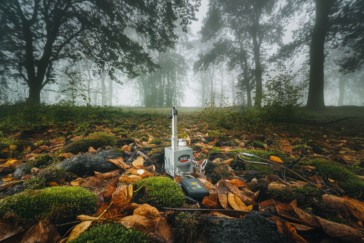
Here’s a climate datapoint you don’t hear every day: some forests are getting better at scrubbing methane out of the air.
After tracking13 forestsin southwest Germany for as long as24 years, researchers report that the soils there are absorbing about3% more methane each yearthan they did in the early 2000s, even as the region has gottenwarmer and drier. The long-term study was led by Verena Lang, with Valentin Gartiser, Peter Hartmann, and Martin Maier, working with teams from theUniversity of Göttingenand theBaden-Württemberg Forest Research Institute (FVA).
That trend runs against the usual doom-and-gloom expectation that warming automatically wrecks ecosystem functions. In this case, the soils look like they’ve become a slightly stronger “vacuum” for methane, one of the most potent heat-trapping gases we pump into the atmosphere.
A rare long-term dataset: 13 beech and spruce forests, measured for up to 24 years
The backbone of this story is patience. The researchers followed13 sites, stands ofEuropean beechandNorway spruce, using the same basic approach long enough to see through the noise of seasons, drought years, mild winters, and all the other chaos nature throws into short studies.
And yes, southwest Germany matters here. It’s a temperate region that’s been trendinghotter and drier, conditions that can change soil moisture and how much oxygen gets into the upper layers of the ground. That oxygen piece turns out to be a big deal for methane.
The headline number is the average: roughly3% per yearmore methane uptake. Compounded over two decades, that’s not trivial. But it’s also not uniform, some sites will swing more than others, and the researchers flag that local factors (nitrogen availability, soil texture, biological activity) can push the rate around.
Methane packs a punch, about one-fifth of human-caused warming
Methane doesn’t get the same public attention as carbon dioxide, but it should. The authors describe it as the second most important human-driven greenhouse gas after CO₂, responsible for roughlyabout 20%of warming tied to human activity.
Why? Pound for pound, methane traps heat far more effectively than CO₂ over the next few decades. So even modest shifts in methane sources, or methane “sinks” that remove it, can move the needle.
Most methane comes from the usual suspects: oil and gas production and transport, livestock, rice paddies, landfills, and natural wetlands. Forest soils fall on the other side of the ledger: they can act as abiological sink, pulling methane out of the air.
Before anyone starts drafting “don’t worry, the forests got this” press releases: the researchers are clear that this doesn’t cancel out human emissions. It’s a narrow mechanism, not a get-out-of-jail-free card.
The dirty little secret is bacteria: they “burn” methane into CO₂
This is microbiology doing quiet work under your boots. Forest soils host specialized bacteria that consume methane diffusing down from the atmosphere. They use it for energy and oxidize it intocarbon dioxide and water.
That conversion matters. CO₂ is still a greenhouse gas, but methane is far stronger in the near term. Turning methane into CO₂ is generally a climate win on the timescales policymakers care about, though it doesn’t make carbon disappear.
These methane-eating microbes preferwell-aerated soils. If soil is waterlogged, oxygen can’t move through it well and methane uptake tends to drop. If soil dries out a bit, within limits, air moves more easily, and methane oxidation can increase. That’s one plausible reason a warming, drying region could seemoremethane uptake rather than less.
Still, don’t over-romanticize it. Extreme drought can also hammer microbial activity. And disturbing soils, compaction from heavy equipment, erosion, poor management, can wreck the physical structure that lets oxygen circulate.
Good news for climate models, not a license to slack off on emissions
The real value here isn’t a single “wow” number. It’s thecontinuity. Long, consistent methane measurements in forest soils are rare, and the team argues this is thelargest continuous dataset in the worldof its kind. That gives climate modelers something solid to test against: can their models reproduce a rising methane sink in temperate forest soils under gradual warming and drying?
For policy, the takeaway is blunt: cutting methane emissions is still the fastest lever for slowing near-term warming. Soil sinks can help at the margins, and they can change over decades, but they’re not going to outmuscle leaks from fossil fuels or emissions from agriculture.
What this study does support is a less glamorous priority: protect forest soils. Keep them structurally healthy, avoid compaction, and manage forests in ways that don’t trash the microbial machinery that provides this quiet service.