
Amazon’s used to swatting away copycats. This one’s different.
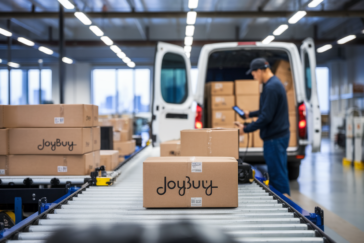
JD.com, one of China’s e-commerce heavyweights, is rolling out a new online shopping platform in Europe calledJoybuy. The pitch is blunt: broad selection, tight control over delivery, and a promise to get orders to your door in aboutthree days. That’s not “wait three weeks and hope the charger doesn’t melt.” That’s a direct shot at the expectation Amazon trained into shoppers.
The launch starts insix countries: theUK, Germany, France, the Netherlands, Belgium, and Luxembourg. Translation for Americans: JD.com isn’t testing the kiddie pool. It’s cannonballing into the richest, most logistics-ready parts of Europe, places where consumers already have plenty of options and very little patience.
Six-country launch: the richest, toughest corners of European e-commerce
Joybuy’s opening map tells you what JD.com thinks it’s doing here: picking fights with grown-ups.
TheUKis a mature e-commerce market where home delivery is a habit, not a novelty.Germanyis big, picky, and already deep in Amazon’s orbit, plus it’s strict about product compliance.Franceis where customer service and trust can make or break you, especially when demand spikes. And theNetherlands, Belgium, and Luxembourg, the Benelux trio, are Europe’s logistics cheat code: dense infrastructure, cross-border shipping, and lots of multilingual consumers.
JD.com isn’t creeping in quietly. It’s choosing markets where shoppers already expect fast delivery, painless returns, and real customer support. If Joybuy fumbles tracking, disputes, or returns early, Europeans won’t “give it time.” They’ll delete the app and go back to the subscriptions they already pay for.
JD.com vs. Alibaba: closer to Amazon’s playbook than AliExpress’s
Here’s the part Amazon should actually care about:JD.com’s reputation in China is built on execution, warehouses, inventory, fulfillment, delivery. That’s much closer to Amazon’s DNA than Alibaba’s classic marketplace model, where the platform mostly connects buyers and sellers and lets the ecosystem do the messy work.
Why does that matter? Because the European consumer doesn’t wake up thinking, “I’d love one more shopping app.” They want fewer headaches: accurate stock, predictable delivery windows, simple returns, and a dispute process that doesn’t feel like arguing with a wall.
But running a logistics-heavy model is expensive. Owning more of the chain means you’re also owning more risk, unsold inventory, demand swings, fixed warehouse costs, and the joy of handling returns at scale. Marketplace models are lighter, but service quality can turn into a roulette wheel. Joybuy is betting Europeans will pay (or at least stick around) for reliability, not just low prices.
Tech, fashion, appliances: a “three-bucket” strategy aimed at bigger carts
Joybuy says it’s coming out of the gate with three core categories:technology, fashion, and home appliances. That mix isn’t random, it’s designed to pull shoppers in with frequent purchases and keep them around for higher-ticket items.
Each category comes with landmines:
Techlives and dies on authenticity, warranties, regional versions, charger standards, and after-sales support. Europeans are hawk-eyed about that stuff, and regulators are, too.
Fashionis the returns business. If your reverse logistics are sloppy, you’ll bleed money and lose customers fast.
Appliancesdrag in the heavy rules: energy labeling, repairability expectations, spare parts availability, and compliance paperwork. Sell a toaster that doesn’t meet standards and you’re not just dealing with angry customers, you’re dealing with authorities.
This puts Joybuy in a straight-up collision withAmazon(which has industrialized fast shipping and returns) and withAliExpress(which has been improving delivery times by moving inventory closer to buyers). It also means competing with strong local specialists in electronics and home goods, companies that offer installation, haul-away, and service plans, not just a box on the porch.
Europe’s real battleground: trust, compliance, and who eats the cost
Joybuy’s timing is spicy. Europe is tightening scrutiny of cross-border e-commerce, product safety, labeling, counterfeit enforcement, seller identification, data rules, the whole alphabet soup. Platforms that want to be taken seriously have to spend real money on controls and local operations. That spending chips away at the low-price advantage that helped a lot of cross-border sellers flood the market in the first place.
So the fight shifts to two things shoppers actually feel:
Trust: Do delivery promises mean anything? Are disputes resolved quickly? Are product descriptions honest? Are returns painless?
Compliance: Are products legal, safe, properly labeled, and backed by real warranties?
JD.com can try to sell “we control the chain” as a feature, especially as European regulators push marketplaces to yank non-compliant products faster and cooperate more with enforcement. If Joybuy can credibly look cleaner than the bargain-basement chaos people associate with some ultra-cheap platforms, that’s a wedge.
And yes, this is also about branding.TemuandSheingot famous fast in Europe, but they’ve also attracted plenty of heat over durability and sustainability. JD.com may be aiming for a more “adult” positioning: smoother service, shorter delivery times, sturdier customer support. That’s not cheap. But it’s how you get shoppers who are tired of gambling on mystery goods.
After 2026: expansion depends less on marketing than on warehouses and regulators
JD.com is framing Joybuy as step one in a broader global push, not a one-off European experiment. The big question is pace: slow and careful, country by country, or faster once the first six markets are stable.
Europe is a headache compared to the U.S.: more languages, more tax complexity, different consumer expectations, and stricter compliance norms. Expand too fast and service quality cracks. Expand too slowly and competitors lock up shipping partners and customer loyalty.
By2026 and beyond, the biggest constraints may be macro stuff: transport costs, energy prices, and how aggressively Europe polices imports and platform responsibility. The era of “ship anything anywhere and sort it out later” is getting smaller by the month.
If JD.com builds real local infrastructure, returns centers, customer service, maybe warehouses, Joybuy could become a serious European operator. If it doesn’t, it risks being just another import storefront with a nicer logo. And if it does build that footprint, then it’s stepping onto Amazon’s favorite battlefield: execution, measured one delivery at a time.
Quick answers
Where is Joybuy launching first?The UK, Germany, France, the Netherlands, Belgium, and Luxembourg.
What’s JD.com’s edge?A logistics-first model, more control over fulfillment and delivery, closer to Amazon than to a pure marketplace.
What’s Joybuy selling?Tech, fashion, and home appliances, aimed at both frequent purchases and higher-value carts.