
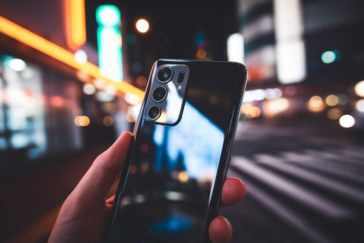
$760 for a phone that can shoot legit night photos without turning every streetlamp into a nuclear blast? That’s the bet behind the POCO F8 Ultra, Xiaomi’s value-hawk sub-brand swinging at the $1,100 crowd.
Night photography is where smartphones usually get exposed. Low light doesn’t just test the sensor, it tests the lens, stabilization, and the software “magic” that can either save a shot or smear it into a watercolor mess. For years, a lot of buyers have assumed “good night photos” equals “four-digit receipt.” POCO’s whole pitch is: not anymore.
A real-world night test from MovilZona, a Spanish tech outlet, says the F8 Ultra’s camera system is better than its price tag suggests. The takeaway is pretty clean: it’s a noticeable step up from last year’s POCO F7 Ultra, and it can land surprisingly close to phones that cost about $220 to $330 more, without claiming it beats them every time.
Three 50MP cameras, OIS, and a 122° ultrawide: the hardware isn’t playing around
POCO kept the camera setup simple and, frankly, smart: three 50-megapixel cameras across the board. You get a 50MP main camera with optical image stabilization (OIS), a 50MP ultrawide with a 122-degree field of view, and a 50MP periscope telephoto aimed at portraits and longer zoom shots.
That matching “50MP, 50MP, 50MP” thing isn’t just brochure fluff. Cheaper phones love to brag about the main camera, then quietly slap a mediocre ultrawide on the back that collapses the second the sun goes down. Keeping the specs high across lenses is POCO signaling it wants consistency, not a one-camera pony.
OIS on the main camera matters at night because it buys you time, literally. Longer exposures without turning the whole photo into blur soup, as long as your subject isn’t sprinting through the frame. Without OIS, phones lean harder on software, and that’s where you get the waxy textures and crunchy edges.
The 122° ultrawide is built for the obvious stuff: neon streets, lit-up buildings, cramped interiors where you can’t step back. The hard part isn’t just brightness, it’s color. Artificial lighting can push photos into sickly yellow, or drain shadows into gray sludge. A higher-res ultrawide suggests POCO’s trying to keep those shots usable, not just “there if you’re desperate.”
And then there’s the periscope telephoto. Long zoom hardware costs money and takes space, which is why it’s often reserved for pricier flagships. At night, telephoto is also where phones tend to panic: less light, more shake, more aggressive smoothing. If POCO can keep portraits natural and distant details sharp without turning textures into digital paste, that’s a real flex at this price.
MovilZona says the big jump is less noise and better dynamic range
MovilZona’s night shooting notes focus on two things that decide whether a low-light photo looks “real” or “phone-y”: noise control and dynamic range.
Noise is that ugly speckled grain that floods shadows when the camera cranks sensitivity. Dynamic range is whether the phone can hold detail in bright highlights and dark areas at the same time, so your streetlights don’t blow out into featureless white blobs while the rest of the scene turns into a cave.
The site says the F8 Ultra “respects the original shadows.” Translation: it doesn’t try to turn night into day. A lot of phones juice nighttime shots until blacks become gray and everything looks like it’s been lit for a movie set. It’s flattering, sure, and also fake. Preserving shadows usually means fewer halos, fewer weird artifacts, and less of that over-processed look.
Better dynamic range shows up fast in the real world: storefronts, signs, headlights, streetlamps. If the processing is dialed in, you keep texture in bright areas and still see detail in walls, clothing, and sky. That’s the difference between a photo you can actually keep and one you immediately want to “fix” afterward.
MovilZona also points to a dedicated processing chip and algorithms doing the heavy lifting, multi-frame merging, alignment, denoising, texture enhancement, local contrast tweaks. The danger zone is always the same: denoise too hard and you erase detail; sharpen too hard and you get harsh outlines. Their “realistic” verdict suggests POCO didn’t crank the sliders to 11.
$760 vs. $1,100: are you still paying for better night photos?
The F8 Ultra lives in the knife-fight price tier: around $760, where buyers expect reliability, not “wow, nice for the money.” MovilZona’s most provocative claim is that phones costing roughly $220 to $330 more often don’t deliver night photos that are “much better” in a lot of common situations.
That doesn’t mean the expensive flagships are scams. They usually win on the stuff you notice when conditions get nasty: faster shutter response, better autofocus in the dark, more consistent color, and fewer misses from shot to shot. But if your photos mostly end up on Instagram, iMessage, or a 6-inch screen, and you’re not zooming in to 100% like a forensic analyst, the gap can shrink fast.
Where the $1,100+ phones still tend to earn their keep is the ugly stuff: very dark scenes with little or no street lighting, moving subjects, backlit portraits, and long-distance zoom on dim details. Bigger sensors, brighter optics, and more mature processing pipelines still matter there.
Also, let’s be honest: people paying four figures aren’t just buying a camera. They’re buying brand, materials, ecosystem perks, and usually longer software support. Camera comparisons don’t settle that whole argument, but they do hit the one thing most people actually use every day.
The real selling point: night photos that don’t fall apart when you switch lenses
Here’s the dirty secret of smartphone cameras: plenty of phones can nail a night shot on the main lens, then completely faceplant when you tap ultrawide or zoom. POCO’s “three serious cameras” approach is meant to stop that.
Ultrawide at night is about atmosphere, architecture, reflections, the whole scene. Telephoto at night is about flattering portraits (less facial distortion) and pulling in details without turning everything into mush. A periscope lens is also a status symbol in phone land, because it’s harder and pricier to build.
Matching megapixels doesn’t automatically mean matching color and exposure, though. Lens quality and tuning still decide whether your ultrawide looks colder, your telephoto looks greener, or your zoom shot looks like it came from a different phone entirely. MovilZona calls the experience “versatile,” which hints POCO tightened that consistency compared to the F7 Ultra.
If a $760 phone can deliver night shots that look close enough to the $1,100 class most of the time, the premium brands have to justify the extra cash somewhere else, support, features, polish, or bragging rights. Night photography used to be the gated community. POCO’s trying to hop the fence.
FAQ
What makes the POCO F8 Ultra better at night photos?
MovilZona credits its three 50MP cameras, OIS on the main camera, and improved processing for lower noise and better dynamic range.
Can it replace a $1,100 phone for night photography?
For common scenes, lit streets, indoor shots, MovilZona suggests pricier phones often aren’t dramatically better. The expensive models still tend to win in very dark scenes, motion, and tougher zoom situations.
What are the three camera modules?
50MP main with OIS, 50MP 122° ultrawide, and a 50MP periscope telephoto for portraits and zoom.